
Taormina
Sicily's most elegant hilltop town, perched above the Ionian Sea with Mount Etna as its backdrop. Visit the ancient Greek Theatre — one of the most spectacularly located amphitheatres in the world. Walk Corso Umberto, pause at Piazza IX Aprile for panoramic views, and descend to Isola Bella for a swim.

Noto — The Baroque Capital
Rebuilt after the 1693 earthquake in late Baroque style using golden limestone that glows beautifully in the afternoon sun. Enter via Porta Reale and walk Corso Vittorio Emanuele past churches, palaces, and Palazzo Nicolaci with its elaborate wrought-iron balconies.

Marzamemi
A small, colourful coastal village built around a historic tuna fishery. Fishing boats and stone buildings frame a lively plaza. Narrow streets feature artisan shops selling preserved tuna, bottarga, and sun-dried tomatoes. Ideal for a leisurely lunch or sunset dinner by the water.
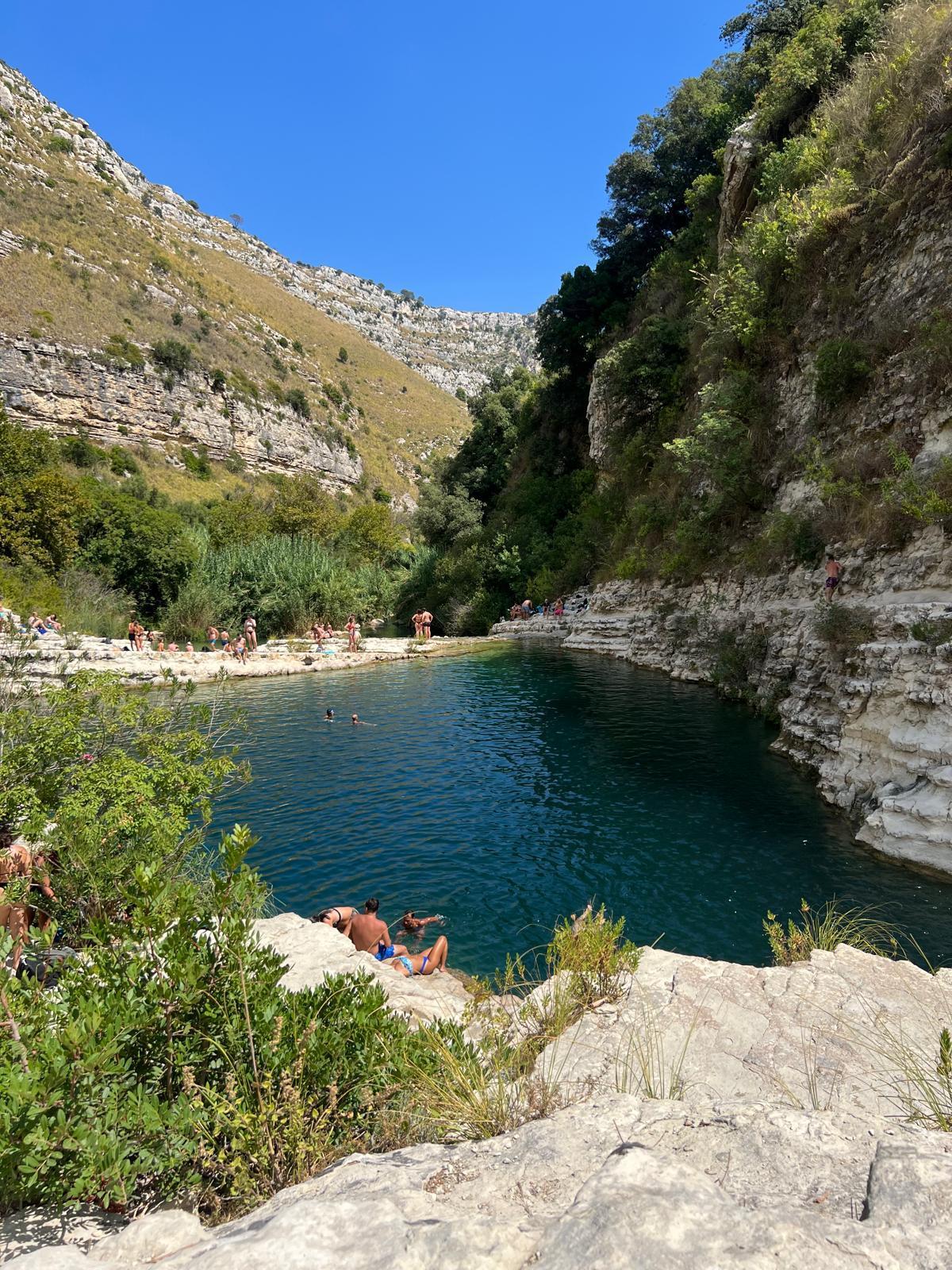
Cavagrande del Cassibile
A deep canyon carved by the river over thousands of years, with steep limestone walls and natural freshwater swimming pools. The viewpoints above are spectacular, but the real experience is descending the rocky trail to swim in clear green water surrounded by total silence.

Ragusa Ibla
One of Sicily's most atmospheric towns — a baroque labyrinth of staircases, alleys, hidden squares, and ornate churches built on a steep hillside. The Duomo di San Giorgio sits atop monumental steps. The pleasure is wandering without a fixed itinerary; Ibla is tranquil and unhurried.

Alcantara Gorges
A geological spectacle formed when ancient lava flows met the cold river, creating tall basalt walls with columnar structure. Walk directly through the river channel between the cliffs — the water is cold even in summer but extraordinarily refreshing on hot days.

Agrigento — Valley of the Temples
One of Europe's most important archaeological sites, preserving monumental Greek temples from the 5th century BCE on a ridge with sea views. The Temple of Concordia is among the world's best-preserved Greek temples. The Temple of Juno and the ruins of the enormous Temple of Zeus demonstrate the ancient city's ambition.

Scala dei Turchi
A brilliant white marl cliff shaped into smooth, wave-like terraces descending to the sea. The contrast between the crystal-clear rock and the deep blue water is extraordinary, especially in warm evening light. The formation appears carved but is entirely natural.